

Stay Lucky casino Plinko
Introduction
Plinko has become one of the most recognisable instant-win formats on modern gambling platforms, and the Stay lucky casino Plinko page is a good example of why. At first glance, the concept looks almost too simple to deserve a long analysis: you choose a stake, set a risk level, drop a ball, and watch it bounce through a field of pegs until it lands in a payout slot. That is the surface. In practice, Plinko creates a very specific type of session rhythm that feels different from slots, roulette, crash games, or live tables.
What makes this format worth a closer look is the contrast between visual simplicity and real session behaviour. The interface is clean, the action is immediate, and the rules can be understood in under a minute. Yet the actual player experience changes sharply depending on row count, multiplier layout, and selected risk mode. On Stay lucky casino, that matters more than many new players expect. A low-risk setup can feel controlled and repetitive, while a high-risk setting can turn the same board into a sequence of mostly small returns interrupted by rare, very large hits. Mobile players should have a look at Stay Lucky Casino legality for active players before installing anything.
In this review, I will stay focused on the game itself: how Stay lucky casino Plinko works, what its pace means in real play, where the pressure points are, and who is likely to enjoy it. If you want to know whether Plinko is genuinely worth trying or simply another trend-driven format, the answer depends less on hype and more on how comfortable you are with fast cycles, visible randomness, and uneven short-term results.
What Plinko is and why it draws so much attention
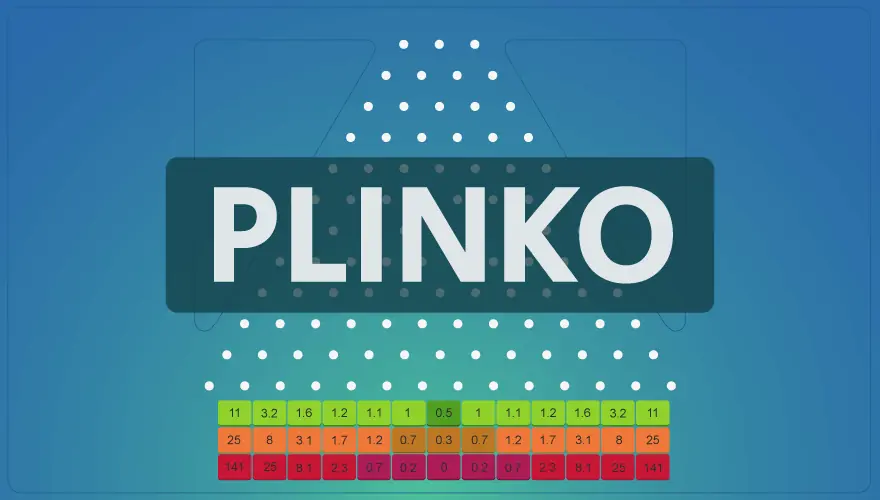
Plinko is a probability-based casino game built around a vertical peg board. A ball is released from the top and deflects left or right as it collides with pins on the way down. At the bottom of the board, each landing zone carries a multiplier. Your result is the original stake multiplied by the value of the slot where the ball finishes. That core idea is easy to grasp, which is one reason the format has spread so quickly across gambling sites serving the United Kingdom and other regulated markets.
The real appeal is not just simplicity. Plinko gives players a visible path from action to result. In a slot, the outcome is presented through reels, symbols, and animations, but the internal calculation remains abstract. In Plinko, the randomness is staged in front of you. You can literally watch the ball drift away from a high multiplier or unexpectedly bounce back toward one. That creates a stronger feeling of suspense per second than many reel-based products manage, even though the underlying mathematics remain fully random.
I also think Plinko stands out because it removes a lot of decorative noise. There is no storyline to follow, no bonus round to wait for, and no paytable to memorise for twenty symbol combinations. For some players, that clarity is refreshing. For others, it is exactly the reason the format can feel too bare after a while. Either way, Stay lucky casino Plinko attracts attention because it delivers immediate cause-and-effect theatre without the visual clutter of a traditional slot.
One observation that often gets missed: Plinko feels “fairer” to many users not because it is more beatable, but because the route to the result is visible. That perception matters. Watching the ball descend gives players a sense of participation, even though the statistical edge still belongs to the house.
How the Stay lucky casino Plinko mechanic actually works
To understand whether this game suits your style, you need to look beyond the drop animation. The usual configuration includes three core variables: stake size, number of rows, and risk level. Each of them changes the session in a practical way.
Stake: this is the amount applied to each drop. Because rounds resolve quickly, even modest bets can add up faster than players expect.
Rows: the number of rows determines how long the ball travels and how many possible paths exist. More rows generally create a wider spread of final landing positions and can support larger top-end multipliers.
Risk level: this is the most important setting. It changes the multiplier distribution across the bottom slots. Lower risk usually means more central, modest returns. Higher risk compresses ordinary results and pushes more value into rare edge outcomes.
Each collision on the board effectively sends the ball left or right. While the animation suggests a physical process, players should understand that this is a digital gambling product, not a skill challenge. The path is governed by the game’s random outcome system. The visual bounce pattern is part of the presentation, not an opportunity for timing or prediction.
That point is crucial because Plinko can create a false sense of pattern recognition. After a few rounds, some players become convinced that edge multipliers are “due” or that repeated centre landings signal an incoming swing. In reality, each drop is independent. The board does not build momentum, remember previous outcomes, or reward manual release habits. Before you make a deposit, it is worth reading withdrawal times overview for the fee and speed details.
| Setting | What it changes | What it means in practice |
|---|---|---|
| Stake size | Cash value of each result | Directly affects how quickly your balance rises or falls during a fast session |
| Row count | Board depth and outcome spread | Can make results feel broader and increase the contrast between common and rare landings |
| Risk level | Multiplier distribution | Low risk gives more stable returns; high risk increases dry spells and rare spikes |
| Auto-play or rapid drops | Session speed | Can accelerate losses or gains before the player has time to reassess |
On Stay lucky casino, the practical lesson is simple: Plinko is not one fixed experience. The same board can behave like a low-pressure casual format or a highly uneven high-variance product depending on your settings. If you ignore that, you are not really evaluating the game you are about to play.
Why the game feels so engaging and how its pace affects a session
Plinko has one of the cleanest action loops in online gambling. You place a stake, release the ball, get a result, and repeat. There is almost no downtime. That alone makes the format engaging, but the stronger reason is psychological timing. The descent lasts just long enough to create tension, yet not long enough to become frustrating. It is a compact suspense cycle.
Compared with many slots, the rhythm is more direct. There are no dead spins in the usual sense because every round visibly resolves into a multiplier. Of course, that does not mean every result is profitable. Many landings may return less than your stake or only a small fraction of it. But because something always happens on screen, the experience feels active even when the balance trend is negative.
This is where Stay lucky casino Plinko can be more intense than it first appears. The game does not ask for much attention in terms of rules, so players often compensate by increasing speed. One drop becomes ten, then fifty. The interface encourages rapid repetition because there is so little friction between rounds. That makes bankroll discipline more important here than in slower formats.
A second observation worth remembering: Plinko compresses emotional swings into short windows. In a slot, a bonus feature may take time to arrive, and anticipation builds around that event. In Plinko, the emotional spikes are smaller but more frequent. You are not waiting for one big trigger; you are living through a constant sequence of near-misses, middling returns, and occasional sharp jumps.
Risk levels, outcome spread, and who should be careful
If I had to identify the single most important factor in any Stay lucky casino Plinko session, it would be the risk setting. New players often treat it as a cosmetic option. It is not. It changes the shape of the entire payout model. For a closer look at the games library, Stay Lucky Casino Trustpilot reviews and player ratings sorts the titles by theme and pace.
Low-risk mode usually concentrates more of the multiplier map around modest returns. You are more likely to see frequent outcomes near the centre of the board, and the top prizes are usually less extreme. This does not remove the house edge, but it often creates a steadier session profile. Your balance may last longer, and the game can feel less punishing over short runs.
Medium-risk mode tends to widen the gap. Ordinary returns are still common, but the board begins to offer more meaningful upside. For many players, this is the most balanced version of Plinko because it preserves the game’s tension without making every session feel like a hunt for a statistical outlier.
High-risk mode is where the game reveals its sharpest edge. Here, much of the value sits in rare landing zones, often near the outer sides of the board. That means long stretches of low or partial returns can be completely normal. When players say Plinko is brutal, they are usually talking about this setup. It can produce exciting headline moments, but those moments are not frequent enough to rely on.
| Risk mode | Typical session feel | Best suited to |
|---|---|---|
| Low | More even, less dramatic, slower balance swings | Players testing the format or preferring controlled pacing |
| Medium | Noticeable tension with a more balanced return profile | Players who want suspense without extreme instability |
| High | Frequent small outcomes and rare large multipliers | Players comfortable with sharp short-term variance |
Who should be cautious? Anyone who tends to chase losses, increase stakes impulsively, or interpret streaks as signals. Plinko can be deceptively dangerous for that player profile because the game always appears one bounce away from a dramatic turnaround. The board makes every miss look close, even when the maths says those top-end results are uncommon. When the support team feels slow, coupons for UK players explains the fastest ways to reach them.
What players need to understand about probabilities and real results
Plinko is often described as simple, but the probability structure behind it deserves respect. The central landing zones are usually more likely because there are more possible paths leading toward the middle than toward the edges. That is why the most eye-catching multipliers are typically placed in the least likely positions. The game’s design depends on that imbalance.
In practical terms, this means three things.
Rare top multipliers are meant to be rare. They are not realistic targets for short sessions.
Short-term results can differ sharply from expectation. You may hit a strong multiplier early, or you may not see one in a long sequence of drops.
Frequent action does not improve odds. More drops increase exposure, not control. To understand the wagering rules behind each offer, open best bingo information for Stay Lucky Casino players next.
Players also need to separate return-to-player theory from session reality. Even if a version of Plinko has a competitive RTP on paper, that figure reflects a very large sample. It does not tell you what will happen over the next twenty or one hundred rounds. With higher-risk settings especially, the difference between theoretical return and lived experience can feel enormous.
One of the more interesting aspects of Staylucky casino Plinko is that it teaches probability visually. You can feel the board pulling outcomes toward the centre. That makes the game educational in a strange way: it shows why “possible” and “likely” are not the same thing. The edge multipliers are visible every round, but visibility should not be confused with accessibility.
How Plinko differs from slots, roulette, and other casino formats
Plinko sits in an unusual position between arcade presentation and gambling mathematics. It is not a slot, even though many players discover it through slot lobbies. It is not a table game either, because there is no strategic decision-making once the drop begins. And while it shares some DNA with instant-win products, it has a stronger visual journey than a simple reveal-based format.
Compared with classic slots, the biggest difference is structure. Slots rely on reels, symbol combinations, bonus features, and layered events. Plinko strips all of that away. There is no free spins round, no expanding wild sequence, and no requirement to learn a paytable. The excitement comes from trajectory rather than feature depth.
Compared with roulette, Plinko feels less binary. Roulette asks you to back a defined outcome set and then wait for the wheel to settle. Plinko presents a broader gradient of possible multipliers, with the result unfolding through motion rather than a single stop. That makes it feel more dynamic, even though both formats are fundamentally chance-driven.
Compared with crash games, Plinko is less about manual nerve and exit timing. You do not need to cash out at the right second. The decision happens before the round, through stake and risk selection. After that, the result is passive to the player. For people who dislike time-pressure decisions, that can be a major advantage.
The trade-off is depth. If you enjoy games that evolve across longer rounds or reward attention to multiple layers of information, Plinko may feel too stripped back. Its strength is immediacy, not complexity.
Practical strengths and real limitations of Stay lucky casino Plinko
Any honest review should acknowledge that Plinko’s strengths and weaknesses are closely connected. What makes the format appealing to one player can make it unsatisfying to another.
Where Plinko works well:
Fast comprehension: you can understand the rules almost instantly, which lowers the barrier to entry.
Clear session control: stake, rows, and risk settings are usually easy to adjust without digging through complex menus.
Visible randomness: the ball path creates suspense in a way that feels transparent, even though the game remains fully chance-based.
Flexible intensity: the same format can be used for calmer low-stake play or sharp high-risk sessions.
Where the game has limits:
Repetition arrives quickly: without features or changing phases, the action loop can feel narrow over longer sessions.
High-speed balance drain: because rounds resolve quickly, poor discipline can turn a short session expensive.
Misleading sense of closeness: near-miss visuals can tempt players into overestimating how often top multipliers should land.
Limited strategic depth: choosing risk and stake matters, but there is no in-round skill component.
In my view, the most important limitation is not volatility by itself. It is the combination of volatility and speed. A slow high-variance slot gives you time to process what is happening. Plinko often does not. That is why the format can feel harmless at low stakes and then suddenly very expensive once a player starts chasing a bigger multiplier map.
What to check before launching a Plinko session
Before opening Stay lucky casino Plinko for real-money play, I would suggest treating it less like a novelty and more like a structured gambling product. A few checks make a significant difference.
Look at the risk setting first. Do not begin in high mode just because the maximum multiplier is more attractive.
Set a stake that matches the speed of the game. If rounds resolve in seconds, your unit size should usually be lower than what you might use in slower formats.
Understand what counts as a meaningful result. A multiplier displayed in bright colours may still return less than your original stake if it is below 1x or only slightly above it.
Use demo mode if available. This is especially useful for learning how different row counts and risk profiles change the feel of the board.
Decide in advance what your session goal is. If you want steady entertainment, low or medium risk makes more sense. If you are specifically hunting rare spikes, accept that long dry stretches are part of that choice.
This last point matters more than most strategy advice around Plinko. The game is easiest to enjoy when your expectations match the selected format. Players who want frequent moderate feedback often do poorly in high-risk mode because they are effectively using the wrong version of the game for their temperament. Table game fans will get more out of this review after reading Stay Lucky Casino poker review for players comparing real money casinos.
Final verdict on Stay lucky casino Plinko
Stay lucky casino Plinko offers a clean, fast, and highly readable gambling format built around visible randomness and adjustable intensity. What it really gives the player is not feature depth or long-form progression, but immediate suspense in compact rounds. That is its core strength. You always understand what is happening, and the link between settings and session feel is clearer than in many slots.
At the same time, the game deserves more caution than its simple layout suggests. The board looks approachable, yet risk level and speed can make the experience far more uneven than beginners expect. High multipliers are attractive precisely because they are hard to reach, and the visual path of the ball can create a false sense that a big result is just around the corner.
Who is this format for? I would recommend Staylucky casino Plinko to players who enjoy short, direct rounds, visible outcome flow, and the ability to choose between steadier and more aggressive session profiles. I would be less enthusiastic for players who need feature variety, deeper game structure, or who are prone to chasing after near-misses.
In the end, Plinko is not compelling because it is trendy. It is compelling because it compresses tension, probability, and instant feedback into one of the simplest interfaces in online gambling. If that combination appeals to you, the game can be genuinely engaging. If you want layered mechanics or slower decision-making, another format will likely suit you better.
FAQ
What happens when the Plinko ball is released?
The ball drops from the top board, bounces off the pegs, and lands in one of the result slots. Each slot has its own multiplier that determines the game outcome.
How does the multiplier work in Plinko?
A multiplier applies based on the slot where the ball finishes. The stakes are multiplied accordingly, so the same bet size can produce different results.
What does risk level mean for Plinko, and does it change the game board?
Risk level typically reflects the volatility of outcomes and how frequently higher multipliers may appear. It does not redesign the entire peg board, but it can change the way results are distributed for the selected settings.
Before entering a promo code or bonus code, is it relevant to Plinko?
Promo codes and bonus codes apply only if the promotion specifically supports the game or the game section. The exact eligibility and terms are shown in the bonus details before activation.
What limit or rule details are commonly missed in Plinko?
Pay attention to stake or session limits and any game restrictions shown in the lobby. Also check whether the current mode uses real-money balance or demo funds to avoid surprises when switching between them.